\"Why Your Brain Treats Every Unfinished Task Like a Crisis\"
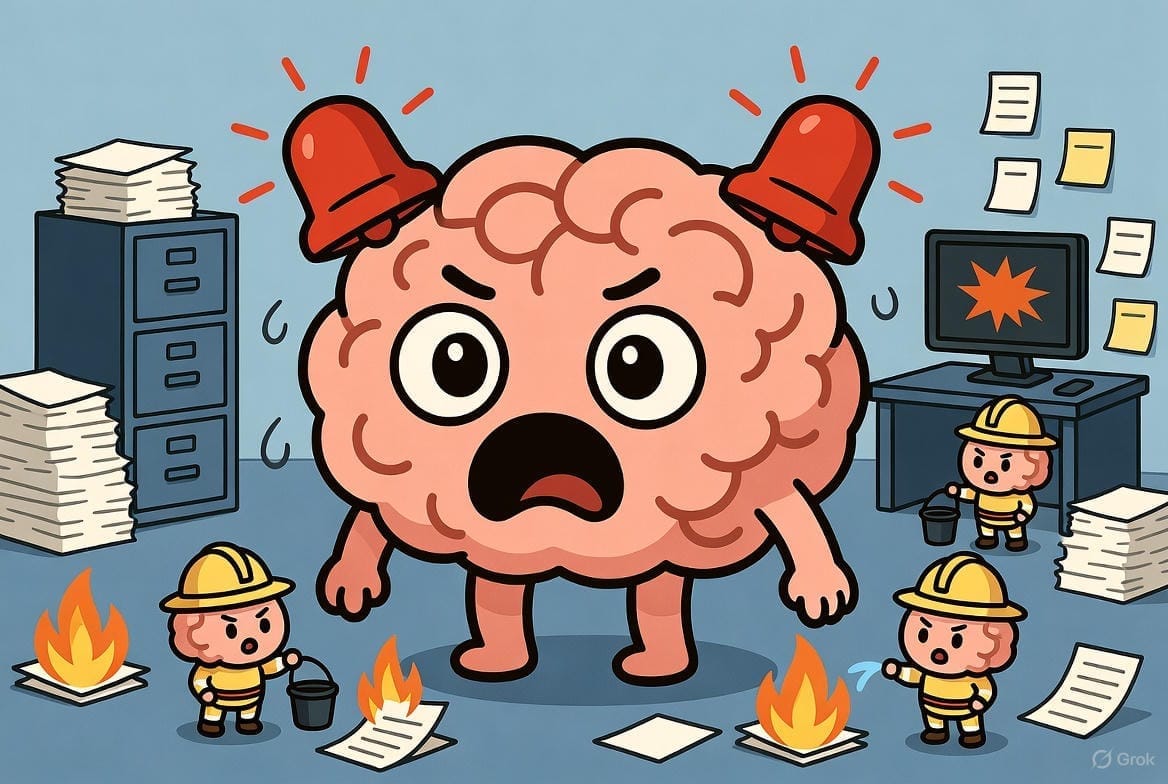
The problem is that in the modern world, not every open loop is a matter of survival. You’re not gathering firewood or building a shelter. You’re replying to an email or trying to remember if you ever confirmed that appointment. But your brain treats all of it with the same urgency. Even a tiny unfinished message can sit in the back of your mind and quietly gnaw at your focus.
Here’s where it gets interesting. Researchers have found that simply starting a task, even if you don’t finish it, can lock it into your memory and make you more likely to return. This is why students who start an essay early, even if they only write one rough paragraph, are far more likely to finish it later. The act of starting plants a mental hook. Once that hook is in place, your brain won’t fully rest until the loop is closed.
You can think of it like staking a flag in your cognitive landscape. The moment the task exists, your mind begins circling around it, checking in, reminding you it’s still there. It’s useful when there are only a few things pulling at your attention. But the downside shows up when too many open loops start piling on top of each other.
A half-finished to-do list. A conversation you meant to revisit. A decision you’ve been pushing off. Each one competes for your mental energy, and eventually you feel more drained from thinking about what you haven’t done than from actually doing anything. It’s the mental version of having too many browser tabs open. Every tab demands a bit of bandwidth, and sooner or later the whole system slows down.
So the real question becomes: how do you use this built-in need for closure without letting it overwhelm you? How do you make the brain’s wiring work for you instead of against you?
There are ways to do it, and most of them start with simplifying what you let stay open in the first place.
Get the latest Unfinished.