
\"Why Your Brain Fills In the Blanks When Closure Never Comes\"
Because your brain treats unresolved moments as open loops, even the smallest lack of clarity can pull your attention straight into a spiral. When something feels unfinished, your mind rushes to fill in the blanks, and it rarely chooses the most generous explanation. Instead, it leans toward worst-case scenarios, replaying the moment and piling on what-ifs you never asked for.
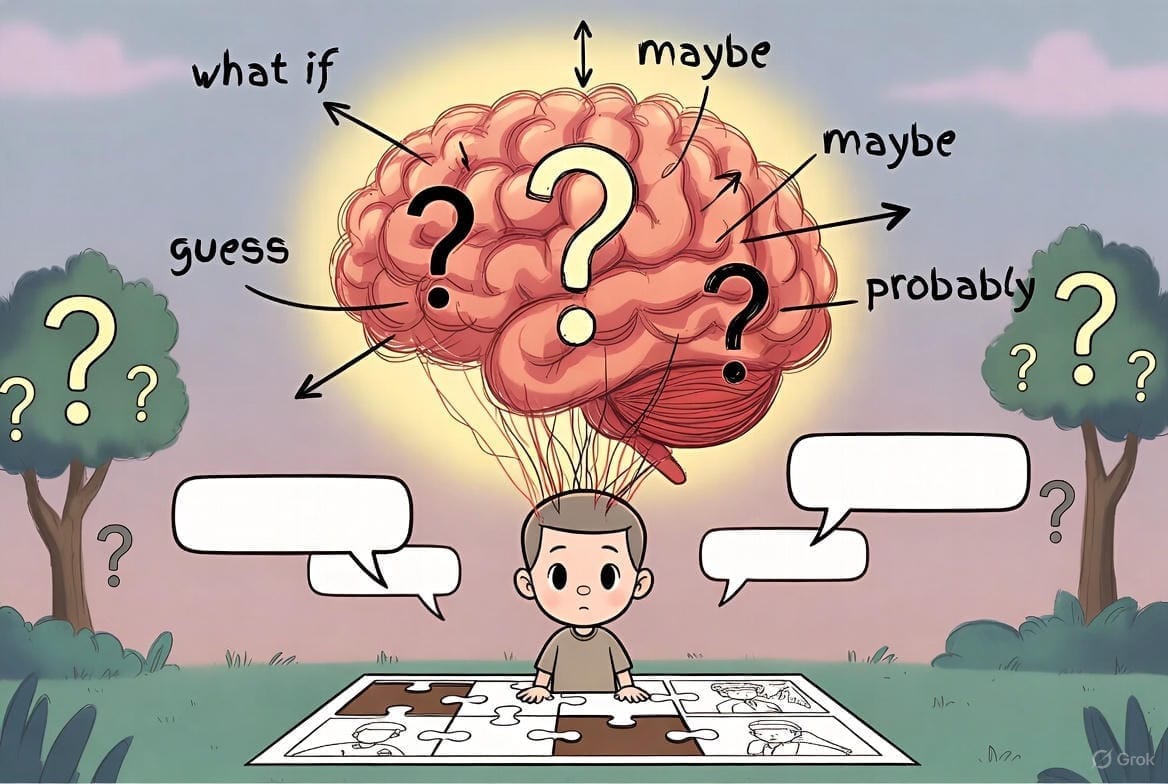
When closure doesn’t come naturally, the brain tries to invent it. The problem is that the closure it creates often doesn’t match reality. It adds confusion, anxiety, and emotional weight that wasn’t there in the first place. This is where consciously creating closure becomes a powerful mental skill.
One useful approach is narrative reframing. If your mind keeps replaying an unfinished story, give it an ending on purpose. For example, if someone didn’t finish a sentence or never replied to your message, write out a few neutral or positive explanations. Maybe they got distracted. Maybe they meant something simple. Maybe it wasn’t personal at all. By doing this, you loosen the loop’s grip. Your brain gets the conclusion it’s craving, even if it’s symbolic.
Another practical tool is the mental shelf technique. When you feel stuck in an unfinished thought spiral, imagine placing that thought on a shelf in your mind with a label that says to be revisited. It sounds simple, but the visualization tells your brain the loop isn’t forgotten, just parked. That’s often enough to calm the internal alarm.
Your brain wants closure. If reality doesn’t hand it to you, you can create a gentle version yourself. Sometimes that small act is all it takes to keep an open loop from running your entire day.
Get the latest Unfinished.