
\"Why Unfinished Tasks Take Up So Much Space In Your Mind\"
There’s a moment when something you left undone slips back into your thoughts, and suddenly it feels bigger than everything you’ve already completed. A quick text you never sent. A conversation that ended halfway. A report sitting on your desk with two lonely bullet points typed out. On their own, they’re small. But in your mind, they feel huge.
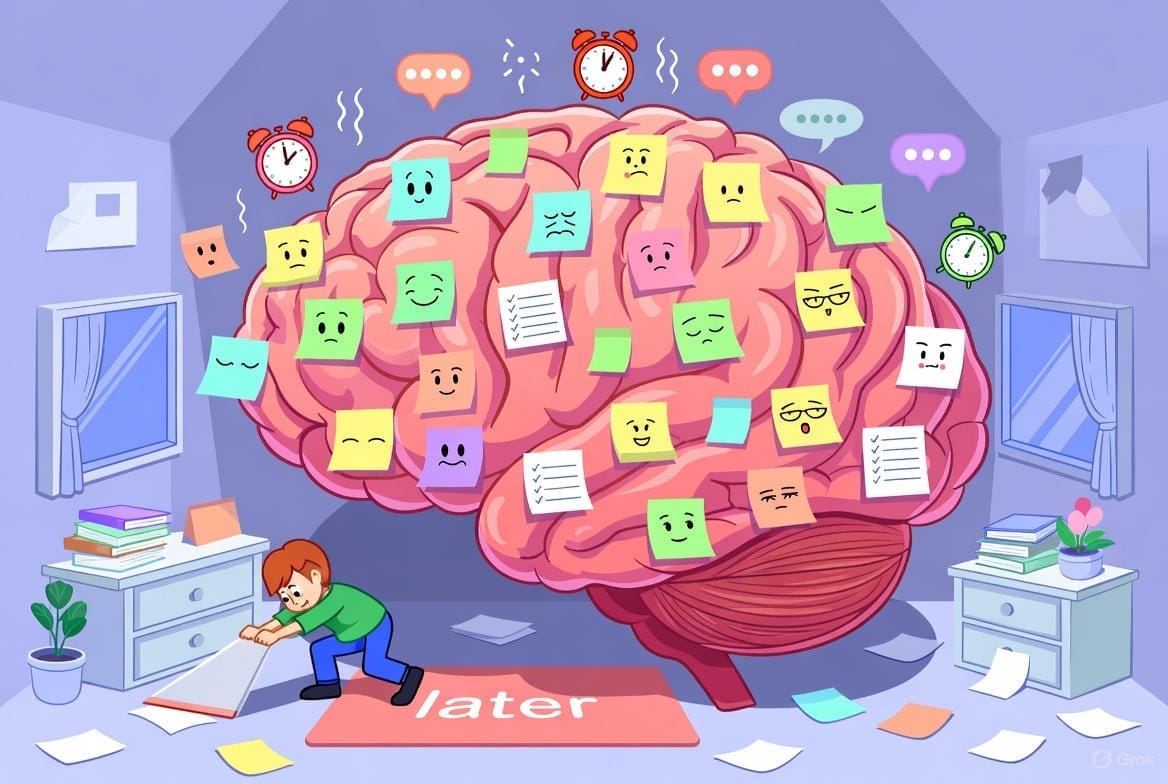
On the other hand, they can trap you. That’s why you sometimes lie awake at night replaying unfinished conversations or why a half-written report can feel heavier than the 10 tasks you already crossed off your list. The question is why. Why does the brain latch onto the things we haven’t finished instead of relaxing about the things we actually accomplished?
It comes down to attention and memory.
Your mind has limited cognitive resources, so it prioritizes anything that feels unresolved. It treats incomplete tasks like tiny alarms, nudging you again and again to return to them. Even when you want to move on, your brain keeps the unfinished work active in the background, as if it can’t afford to let the thought fade.
And there’s actually a reason for that. From an evolutionary point of view, leaving things incomplete wasn’t just inconvenient. It was dangerous. If our ancestors started building shelter or gathering food but didn’t finish, their survival was at risk. So the brain developed a bias: keep the unfinished thing front and center until it’s done.
That instinct still runs in us today, even though our “unfinished tasks” are usually far less dramatic than life-or-death survival. But the brain doesn’t care. It still treats loose ends like they matter more than the wins you’ve already stacked up.
And that’s why they follow you around. Unfinished things echo louder. Your brain is just trying to protect you, even if it means interrupting your sleep over a half-done email.
Get the latest Unfinished.