\"Learning to Live With Open Loops\"
The search for closure says a lot about how we move through life. We like things tidy. We want stories to have endings, problems to have solutions, and feelings to wrap up neatly so we can file them away. Uncertainty makes us uncomfortable, so we chase resolution the same way we chase answers, hoping it’ll give us some kind of peace.
But life doesn’t work like that.
Life is messy, uneven, and full of unfinished chapters. Some questions won’t get answered. Some conflicts won’t resolve cleanly. Some people won’t apologize, and some moments won’t circle back for a neat conclusion. As frustrating as that is, it’s also part of being human.
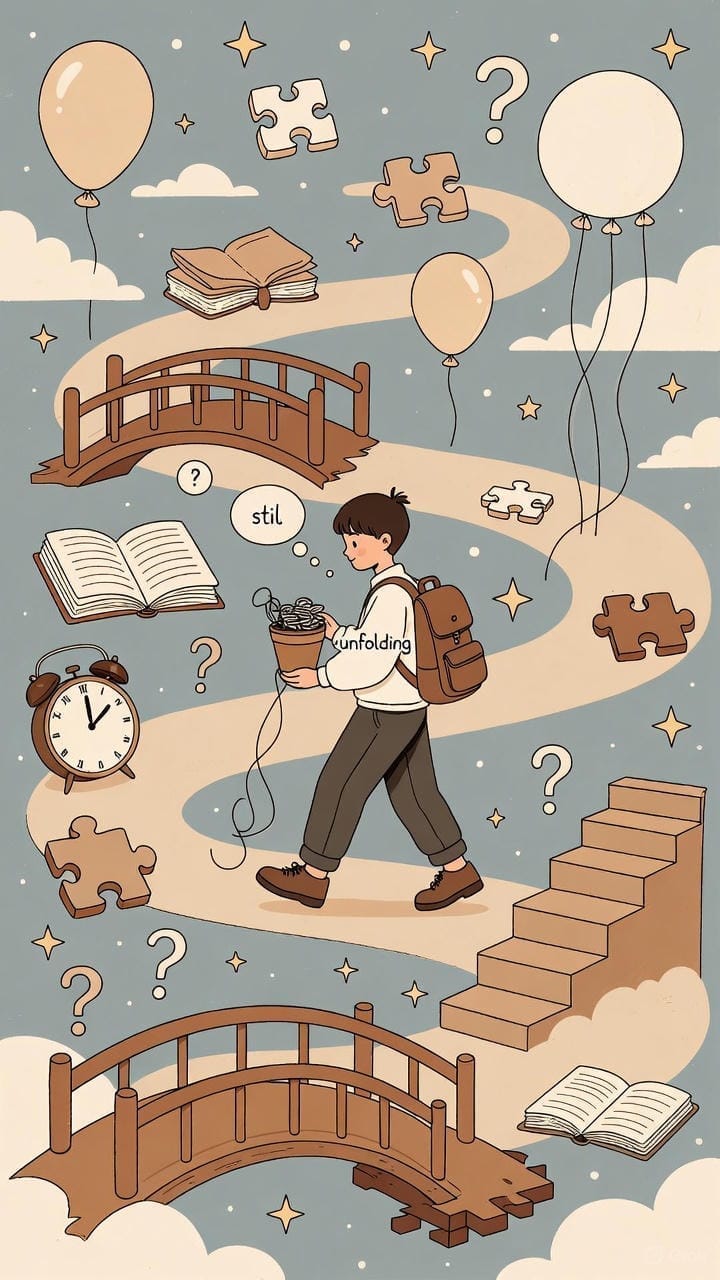
This is where the real skill comes in: learning to live with open loops without letting them consume you.
When you understand this, it changes the way you think about almost everything. It shows up in how you learn, too. The best learning often comes from curiosity that isn’t fully satisfied. When something doesn’t resolve right away, your mind stays engaged. It keeps reaching, exploring, and searching for meaning. The open loop becomes fuel instead of stress.
It’s the same with storytelling. The moments that linger in your memory aren’t always the ones with perfect endings. They’re the ones that leave space, the ones that make you think, the ones that invite you to fill in what’s missing. A little ambiguity gives a story life long after it’s over.
So yes, closure feels good. It makes the world feel easier to understand. But being able to sit with what’s unfinished, unclear, or unresolved is its own kind of strength. It means you’re not ruled by the need to control every detail.
You can breathe in the middle of the unknown. You can move forward even with open loops trailing behind you.
And honestly, that’s where most of real life happens.
Get the latest Unfinished.